

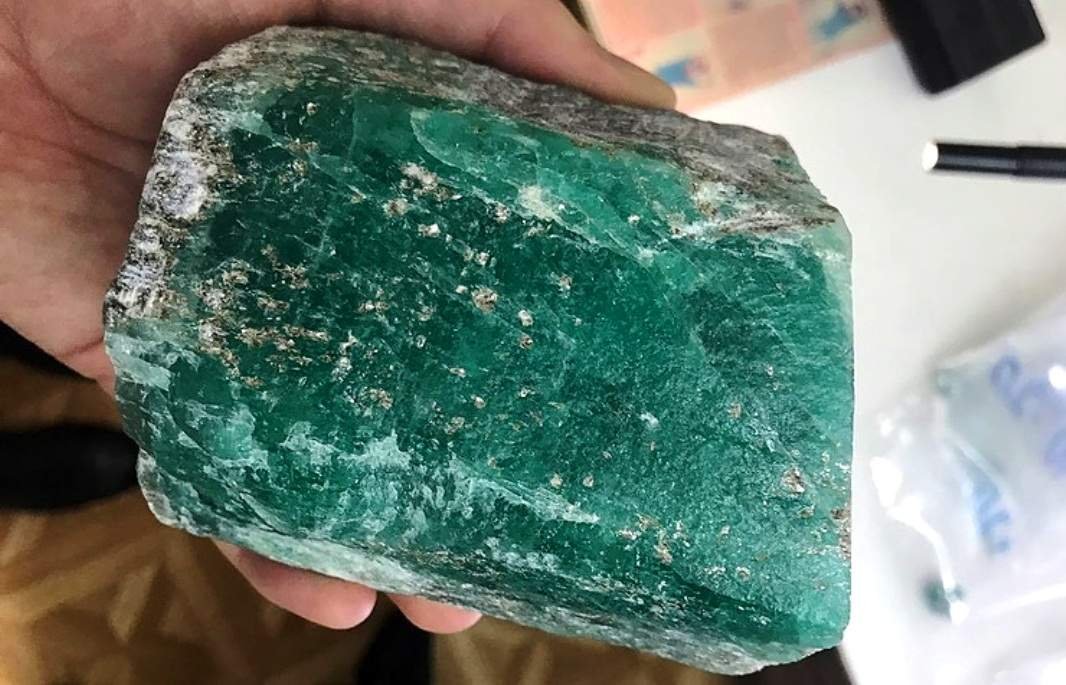
While Russia is not a primary global source of emeralds, it is capable of producing fine-quality stones. The emeralds from Russia are often used for carvings, although faceted emeralds do appear on occasion. Interestingly, the term Uralian emerald is sometimes used to refer to demantoid garnets, which can cause confusion. These garnets, like emeralds, are mined in the Ural Mountains, alongside Alexandrite, a gem known for its color-changing properties.
Color and Quality of Russian Emeralds
Emeralds from Russia typically exhibit a pure green color without the bluish undertones that are common in emeralds from other regions like Colombia. As with any gemstone, there are exceptions, but the general characteristics of Russian emeralds are consistent. However, inclusions are more frequent in Russian emeralds, making them less clear compared to those from Colombia. This contributes to their rarity in the market, as it is harder to find clear enough stones to facet.
Due to these inclusions, most Russian emeralds are carved into cabochons, a smooth, rounded shape, rather than faceted to show their brilliance.
History of Emerald Mining in Russia
The Ural Mountains have been a key source of emeralds since their official discovery in the early 19th century. However, it’s believed that they may have been mined for centuries earlier, possibly being referenced as Scythian emeralds by the Roman historian Pliny the Elder in his work Natural History (23-79 A.D.).
What makes the mining operations in the Urals unique is their historical significance. Specifically, the Malysheva mines were used during the Soviet era for beryllium extraction. Beryllium was crucial for the development of Soviet nuclear and defense industries, and the emeralds and alexandrite found as byproducts were a secondary focus.
As a result, the infrastructure at these mines is among the most advanced in the world, built to support large-scale industrial production.

Current State of Russian Emerald Mining
The collapse of the Soviet Union in the 1990s put a halt to large-scale mining operations, and the emerald mines faced a period of stagnation. The Russian economy required foreign investment to restart production, but this effort began to gain traction only in the past decade.
Modern research has revealed that the Malysheva mine sits atop one of the largest emerald deposits in the world. Spanning a 1.4-kilometer stretch at the northern end of the Ural Emerald Field, this mine is believed to contain up to 80 percent of the known emerald reserves in the region.
Emerald Production in Russia
Emerald production in Russia is highly inconsistent, with large gaps between the discovery of valuable emerald pockets. The Ural mines do not produce emeralds with the regularity or top quality seen in countries like Colombia or Zambia. As a result, faceted Russian emeralds are a rarity in the market. However, renowned Russian jewelers like Fabergé have used Malysheva emeralds in their creations, further elevating the gemstones’ prestige.
While production remains sporadic, advances in mining techniques are expected to increase the availability of high-quality Russian emeralds in the future.